
Motifs and Symbols in Indigenous Crafts: A Spiritual Journey Through Culture

QUICK SUMMARY
Indigenous crafts embody a living heritage where every symbol, color, and shape carries deep meaning. For the Ilnu people and many other nations, these creations are an essential link to ancestors, nature, and the spiritual world, transmitting values and knowledge across generations.
The importance of symbols in Indigenous crafts
In Indigenous crafts, patterns are not just aesthetic; they tell stories. For example, circular patterns, often found in necklaces and textiles, symbolize the interconnectedness of life, community, and nature. They represent the balance and harmony between humans, animals, and the Earth.
Geometric shapes, such as triangles or diamonds, are frequently used in textiles and embroidery. These patterns can symbolize sacred mountains, stars, or constellations, linking artisan creations to the sky and the spirit world. The zigzag pattern, meanwhile, can represent the movement of water, a vital and sacred element in many Indigenous cultures.
Natural materials: A connection to Mother Earth
Beyond patterns, the materials used in Indigenous crafts also carry symbolic weight. Beads, feathers, and leather are often used, not only for their beauty but also for their spiritual significance. For example, feathers, often incorporated into jewelry and clothing, symbolize the connection to birds, which are considered messengers between the human world and the spirit world.
Beads, another key element, are often chosen based on their color and meaning. Blue, for instance, often represents water and sky, elements essential to Indigenous life and spirituality. Red can symbolize the earth and life force, while white is associated with purity and ancestral wisdom.
Indigenous crafts: a living heritage to preserve
Buying Indigenous craft products goes far beyond acquiring a beautiful object. It directly supports artisans and contributes to the preservation of millennia-old traditions. On our Artisanat Autochtone online store, every piece you buy is a unique work, full of meaning and culture. The artisans we represent, such as Dave Verreault-Thisselmagan and other Ilnu creators, strive to keep these ancestral practices alive while adding their personal touch.
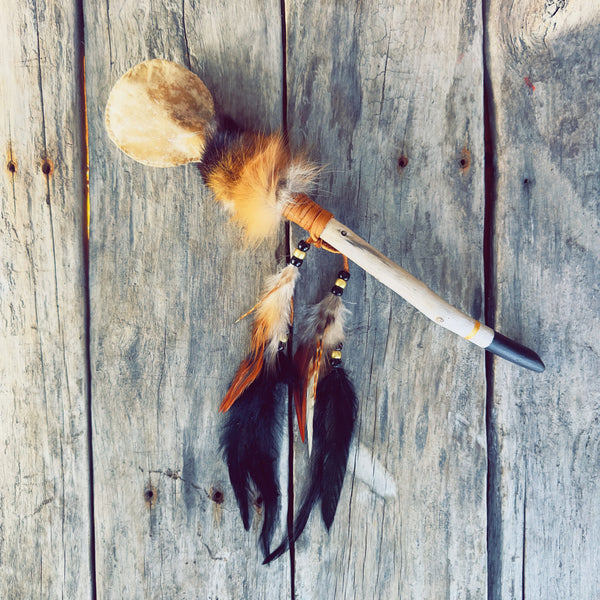
When you buy a necklace adorned with bead patterns or a braided leather bracelet, you carry with you a piece of this history and spirituality. Each creation is a bridge between ancient times and our modern world, a reminder that beauty lies not only in the object itself but also in what it represents.
Conclusion: Bearers of culture and spirituality
Indigenous crafts are a window into the beliefs, traditions, and values of Indigenous peoples. Each pattern, each symbol is a message transmitted through the ages, and by purchasing these creations, you participate in the transmission of this heritage. Explore our collection and discover the deep meanings behind each piece, to understand how Indigenous crafts are much more than a simple decorative object — they are a living part of Indigenous history.
Sources and references:
1. Indigenous Art and Culture: Motifs and Meanings - Indigenous Foundations
2. The Spiritual Symbols of Indigenous Craft - Cultural Survival
Deepen what you feel
Some objects accompany an inner journey. Choose the one that resonates with your intention.

