
What big brands can't offer: the power of local handmade goods

Quick summary
In 2026, heritage craftsmanship and traditional woodworking redefine luxury. In contrast to mass production, indigenous handmade creations become therapeutic and spiritual anchors. Each talking stick or rattle made of natural wood is more than just a product: it's a collector's item that carries the medicine of the land.
The excellence of Ilnu craftsmanship, combining millennia-old tradition and high-end design.
In a world saturated with speed, images, and instant gratification, a powerful counterculture is emerging. People are no longer just looking for aesthetically pleasing objects. They are seeking meaning, depth, and a genuine connection with what they bring into their living spaces.
Heritage craftsmanship directly addresses this need. It does not promise industrial perfection, but the truth of the gesture. It does not seek to standardize, but to reveal singularity.
This global movement places the craftsman at the heart of contemporary luxury. Not as a manufacturer, but as a bearer of memory, a guardian of know-how, and a creator of links between generations.
For the Indigenous artisan, this trend is not new. It is a natural continuation. My work in Mashteuiatsh is part of a lineage where every gesture is a transmission, where every object is born from a dialogue between the hand, the heart and the territory.
Creating is not producing.
To create is to honor.
The essence of traditional woodworking: a living dialogue with the land
The term "traditional woodworking" is experiencing explosive growth online. It evokes mastery of hand tools, respect for natural wood, and a deliberate slowness. It symbolizes a return to ancestral methods where time is an integral part of quality.
Unlike mass production, my approach to cedar, birch or driftwood is a dialogue.
I don't force the material. I listen to it.
Each piece of wood has its own character. Some fibers are dense, others supple. Some pieces bear the marks of wind, cold, and harsh seasons. These marks are not erased. They are honored.
To sculpt by hand is to accept that the wood dictates part of the final form. It is to collaborate with the living material rather than constrain it. It is this intimate relationship with the material that transforms a talking stick or a spiritual rattle into a high-end work of art.
By 2026, true luxury is no longer perfect standardization. True luxury is owning an object whose origin can be traced back to its roots.
Indigenous handmade goods as a therapeutic antidote
Industrialization has standardized the world. Same shape. Same texture. Same feel. Same lack of soul.
Handmade crafts do exactly the opposite.
There has been a marked increase in searches related to therapeutic crafts, energy objects, and meaningful creations. People are looking for points of reference, anchors, and silent presences capable of supporting their inner balance.
The living wood, moose leather, and beads are not decorative. They are relational. They carry the memory of the territory, the strength of the animal, the patience of the gesture, and the intention of the creator.
Holding a natural wood talking stick or using a traditional rattle is slowing things down.
It's about breathing. It's about remembering that we are part of a whole.
This connection with natural cycles and with Mother Earth is not a marketing concept. It is a reality passed down for millennia.
Objects that transcend time
Heritage craftsmanship does not seek to follow trends. It seeks to transcend time.
These creations are designed to last, to develop a patina, to transform over the years. They gain in beauty with use. They absorb the life of the person who owns them.
An indigenous handmade object does not age. It matures.
It is this ability to transcend time that makes them contemporary collector's items.
Why do these objects become collector's items?
- • Traceability: each piece has a history and an identifiable craftsman.
- • Uniqueness: there is only one version of each sculpted work.
- • Depth: a conscious prestige that moves from appearance to substance.
- • Transmission: an object carrying meaning that can be passed on.
Today's collectors are no longer just looking for rarity. They are looking for meaning.
An identity choice
Choosing the heritage craftsmanship of Dave Verreault-Thisselmagan is not simply buying an object.
This is to state:
I choose the soul.
I choose history.
I choose the truth.
It's investing in a bridge between past and future. Between humanity and the land. Between the visible and the invisible.
Conclusion
Heritage crafts and traditional woodworking are not simply research categories. They are reflections of a shift in consciousness.
In 2026, luxury is no longer defined by abundance, but by relationship. Relationship to territory. Relationship to materials. Relationship to gesture.
Each handmade indigenous creation becomes a meeting space between the old and the contemporary, between memory and the future, between the human and the living.
Choosing a work produced using this expertise means choosing to inhabit the world differently.
With respect. Slowly. Meaningfully.
And it is precisely this way of being in the world that transforms an object into an inheritance.
The Artisan's Gallery
Discover the authentic creations crafted by Dave Verreault-Thisselmagan.
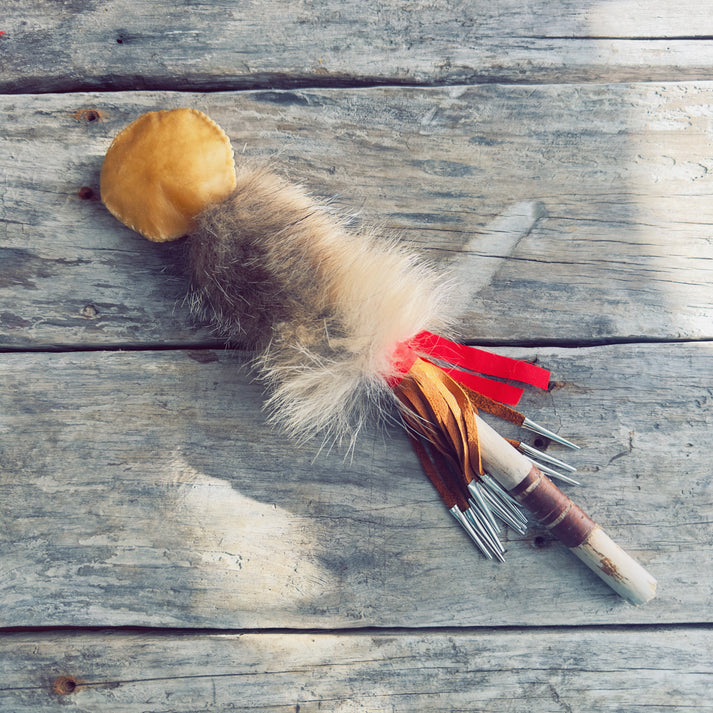
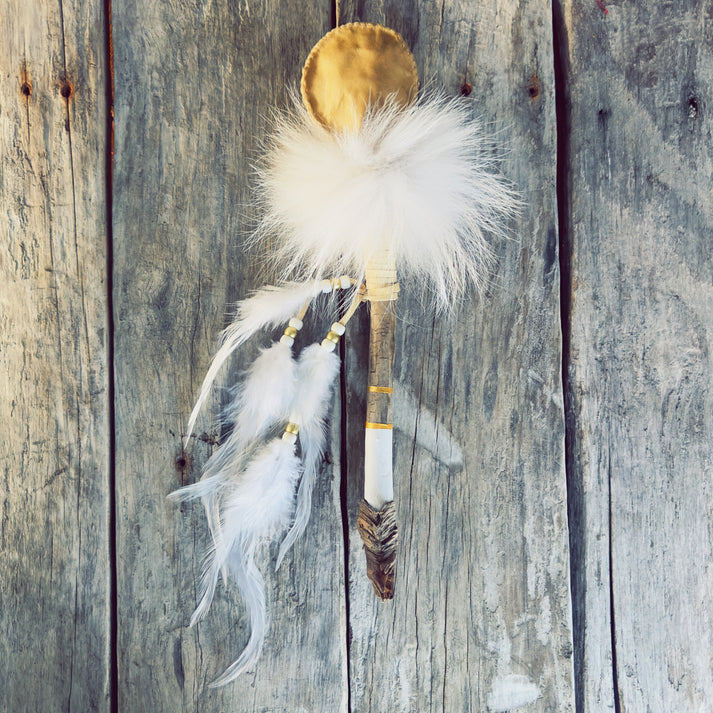
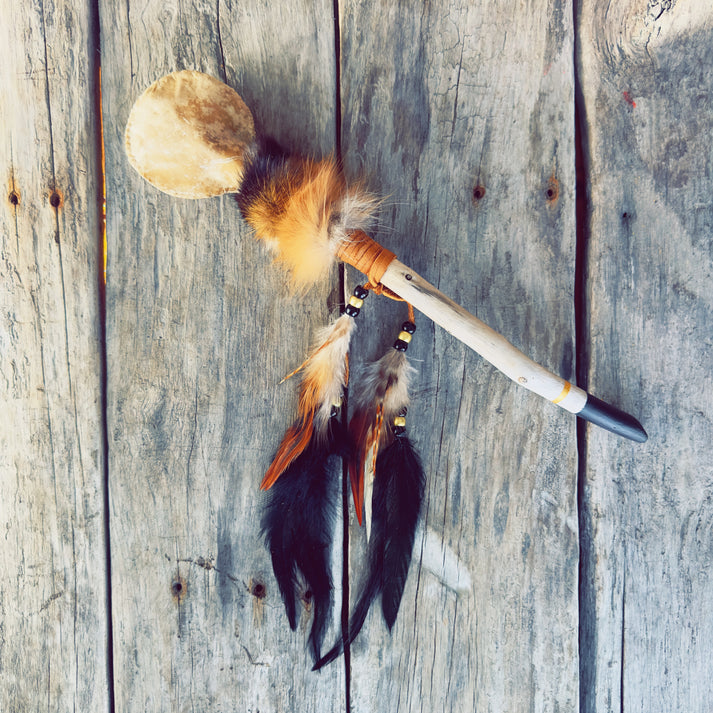
Each rattle is handcrafted on the Nitassinan by the Ilnu craftsman Dave Verreault-Thisselmagan.